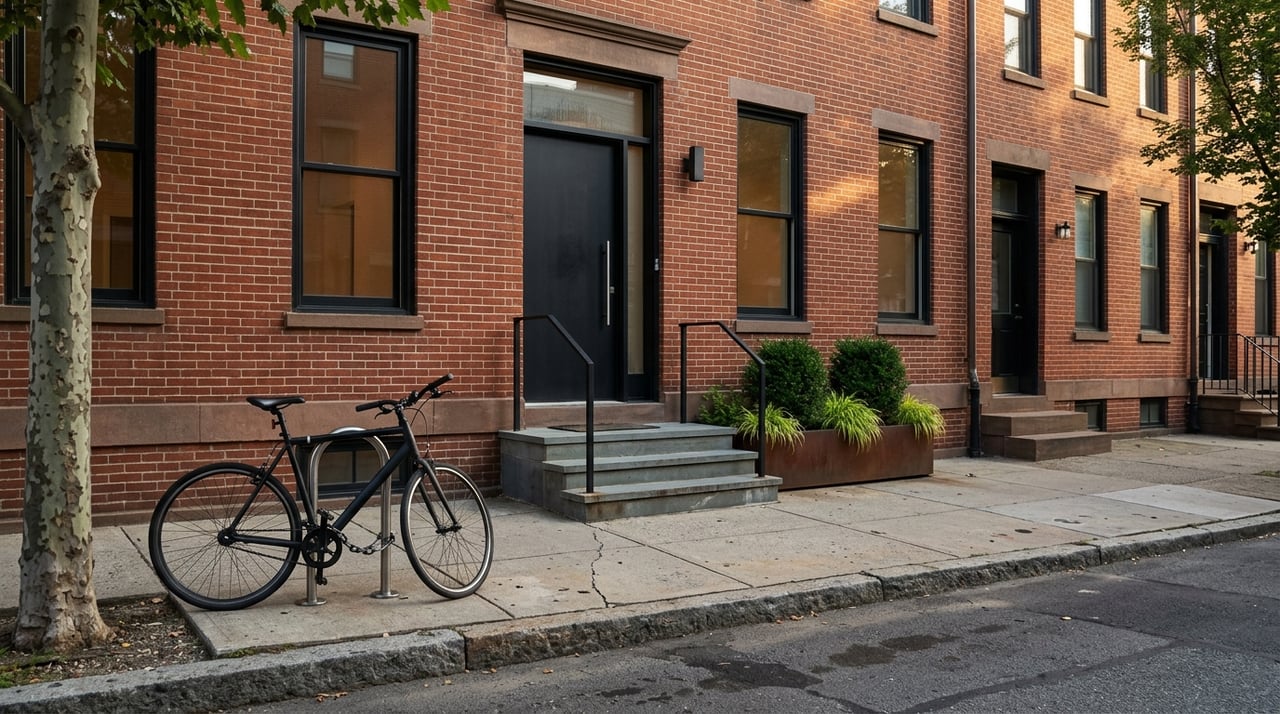
Wondering if you can really live in South Philly without relying on a car every day? In Point Breeze and Southwest Center City, the answer is often yes, but your experience depends a lot on exactly where you live and how you like to get around. If you are weighing these neighborhoods for your next move, this guide will help you compare walkability, transit, biking, and daily convenience so you can choose a location that fits your routine. Let’s dive in.
How car-free-friendly are these neighborhoods?
If your goal is a mostly car-free lifestyle, both Point Breeze and Southwest Center City can work well. The biggest difference is consistency. Graduate Hospital, which sits within Southwest Center City, tends to offer a more seamless day-to-day experience on foot, while Point Breeze can feel more block-specific.
Walk Score rates Point Breeze at 89 for walkability, 74 for transit, and 82 for biking. Graduate Hospital scores even higher at 95 for walkability, 85 for transit, and 94 for biking. In simple terms, that means you are more likely to find errands, dining, and transit options close by in Graduate Hospital from a wider range of blocks.
That does not mean Point Breeze is car-dependent. It means location matters more. The City of Philadelphia identifies Point Breeze Avenue as the neighborhood’s traditional commercial heart, with Broad Street as another major retail corridor, so the best car-free setups are usually closer to those corridors and transit connections.
Why Graduate Hospital feels easier
Graduate Hospital is one of the more turnkey choices for buyers who want to walk often and drive rarely. The neighborhood has a dense mix of restaurants, cafes, shops, and markets woven into the residential grid, which makes daily routines feel simple and compact.
Visit Philadelphia describes the area between Lombard Street and Washington Avenue and between Broad Street and Grays Ferry Avenue as a neighborhood where amenities are closely integrated into everyday life. Walk Score reports about 110 restaurants, bars, and coffee shops in the area, with an average of 11 reachable within a five-minute walk. If you want your errands, coffee stop, and dinner plans to feel naturally close together, that convenience is hard to ignore.
Another major advantage is access to outdoor routes. The South Street Bridge ramp connects to Schuylkill Banks, giving you a strong car-free option for walking, running, and biking. That connection adds flexibility for both recreation and commuting.
Why Point Breeze still works well
Point Breeze can absolutely support a mostly car-free lifestyle, especially if you choose your block carefully. The neighborhood tends to work best for buyers who are comfortable being a bit more strategic about proximity to Broad Street, Washington Avenue, Point Breeze Avenue, and SEPTA stops.
The tradeoff is that convenience is not spread as evenly across the neighborhood. Walk Score shows Point Breeze averages about three restaurants, bars, and coffee shops within a five-minute walk, which is a notable difference from Graduate Hospital. If you live near the stronger corridors or transit nodes, daily life can feel very manageable without a car. If you live farther from them, you may rely more on biking, buses, or a longer walk.
Point Breeze also offers neighborhood assets that support local, low-car living. Indego’s South Philadelphia West guide highlights murals, gardens, and parks in the area, including Ralph Brooks Park & Community Garden, along with connections toward Schuylkill River Park.
Transit options that make daily life easier
For both neighborhoods, the Broad Street Line is the main transit backbone. SEPTA stations that matter most here include Ellsworth-Federal, Lombard-South, Tasker-Morris, Snyder, and Oregon. If you want fast north-south access into Center City, this line is one of the strongest reasons these neighborhoods work without a car.
Bus service adds another layer of flexibility. Route 29 runs along Washington Avenue through Point Breeze and connects with Ellsworth-Federal, Tasker-Morris, and Snyder stations. Route 17 also serves Ellsworth-Federal and Tasker-Morris, then continues into Center City, which makes it especially useful if you commute north toward the office core.
If you are comparing homes, transit distance should be part of your search criteria. A few blocks closer to a Broad Street Line stop or a useful bus route can make a meaningful difference in how often you choose transit over driving.
Bike infrastructure to know
Biking expands your range in both neighborhoods. If you like the idea of handling errands, commuting, or weekend rides by bike, the local infrastructure gives you more options than many buyers expect.
Indego, Philadelphia’s bike-share system, operates more than 2,000 bikes at more than 250 stations across the city and runs 24/7. The system includes active station coverage in the Point Breeze area, including wayfinding signage at Point Breeze & Tasker. That can be especially helpful if you want occasional access to a bike without storing your own.
For a calmer north-south route, the 13th & 15th Street Neighborhood Bikeway runs from Oregon Avenue to Lehigh Avenue. The city designed it as a priority bicycle corridor and a calmer alternative to Broad Street. If you want to travel toward Center City by bike, that route can feel more comfortable than riding on higher-traffic streets.
The Schuylkill Banks Boardwalk is another key asset. It extends the Schuylkill River Trail and connects to the South Street Bridge through a 460-foot ramp open to pedestrians, cyclists, and ADA-compliant access. That gives Southwest Center City, in particular, a strong link to one of Philadelphia’s best multi-use pathways.
Where daily amenities cluster
If you want a true car-light routine, the pattern of amenities matters as much as the neighborhood name. In Point Breeze, everyday convenience tends to cluster near Point Breeze Avenue, Broad Street, Washington Avenue, and major transit nodes. Those are the areas where you are most likely to feel that errands and services are close at hand.
In Graduate Hospital, the amenity pattern is more compact and spread across the neighborhood grid. That usually means less planning and fewer tradeoffs. You are more likely to have dining, coffee, and everyday stops within a short walk.
For buyers, this matters when comparing two homes with similar finishes or price points. A beautiful house on a quieter block may still feel less convenient day to day if it puts you farther from your transit stop or basic errands. For many city buyers, that routine can shape how a home feels long after move-in day.
A note on summer comfort
Car-free living is not just about distance. It is also about comfort. Philadelphia’s Health Department identifies Point Breeze as one of the city’s hotter neighborhoods due in part to lower tree canopy, fewer green spaces, and more exposed asphalt and dark surfaces.
That does not make walking or biking unrealistic. It does mean route choice, timing, and shade matter more, especially during hotter months. If you are touring homes in summer, pay attention to how the block feels on foot and how easy it is to reach transit or errands without a long stretch in the heat.
Common car-free commuting patterns
Your day-to-day route can help narrow your search. If you work in Center City, Point Breeze offers several practical car-free patterns depending on where you live. Riders coming from western Point Breeze often head north from the 22nd & Tasker area, with routes that connect toward Schuylkill River Park, the River Trail, and Center City.
For transit commuters, Route 29 provides a Washington Avenue option, while nearby Broad Street Line stations offer quick access toward City Hall, Walnut-Locust, and the rest of Center City. If speed to the office is your priority, homes with easier access to the Broad Street Line may deserve extra attention.
From Graduate Hospital, commuting tends to feel more straightforward. Many residents can walk north toward Rittenhouse, City Hall, and Market West, or use nearby transit if they want to shorten the trip. The neighborhood’s location just south of Center City is one of its biggest car-free advantages.
If you need access to University City, Graduate Hospital also offers a practical route west to the South Street Bridge and Schuylkill Banks connection. That makes campuses across the river a realistic bike or transit commute.
Which neighborhood fits your lifestyle?
If you want the easiest version of car-free living, Graduate Hospital is usually the stronger match. It offers a higher concentration of daily conveniences, stronger walkability scores, and excellent access to Center City and Schuylkill Banks.
If you are open to a more selective home search, Point Breeze can still be a strong fit. It works especially well if you value access to Broad Street, Washington Avenue, Indego, and the Broad Street Line and are comfortable making block-by-block tradeoffs.
The key is to think beyond the listing itself. In these neighborhoods, two homes that seem close on a map can offer very different daily routines. A local search strategy can help you focus on the blocks that align with how you actually want to live.
If you are considering a move in Point Breeze, Graduate Hospital, or nearby Center City neighborhoods, The Eric Fox Team can help you compare locations, commute patterns, and day-to-day convenience so you can find a home that fits your lifestyle.
FAQs
Is Point Breeze in Philadelphia good for car-free living?
- Point Breeze can work well for mostly car-free living, especially near Point Breeze Avenue, Broad Street, Washington Avenue, and SEPTA connections, but convenience tends to vary more by block than in Graduate Hospital.
Is Graduate Hospital better than Point Breeze for walking everywhere?
- Graduate Hospital generally offers a more seamless walking experience because it has higher walkability, transit, and bike scores and a denser mix of restaurants, cafes, shops, and markets.
What SEPTA options support car-free living in Point Breeze and Southwest Center City?
- The Broad Street Line is the main rail option, with nearby stations including Ellsworth-Federal, Lombard-South, Tasker-Morris, Snyder, and Oregon, while Routes 29 and 17 add useful bus connections.
Can you bike from Point Breeze or Graduate Hospital to Center City?
- Yes, both neighborhoods support bike commuting through local street routes, Indego access, the 13th & 15th Street Neighborhood Bikeway, and connections to Schuylkill Banks and the South Street Bridge.
What should buyers look for if they want a car-light home in Point Breeze?
- Buyers should pay close attention to block location, especially distance to commercial corridors, transit stops, bike-share stations, and everyday errands, since convenience can change noticeably from one part of the neighborhood to another.