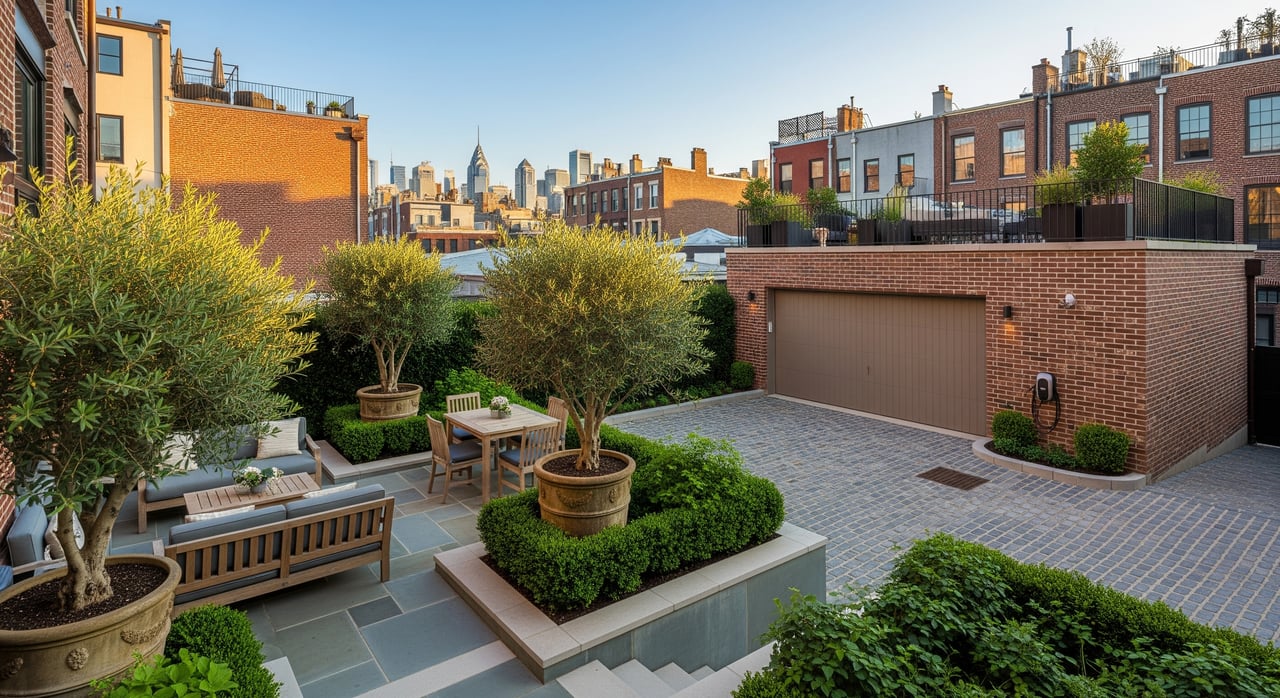
Thinking about buying or selling in Graduate Hospital and wondering what a roof deck, patio, or deeded parking is really worth? You are not alone. In a dense, walkable neighborhood where outdoor space and off-street parking are scarce, the right feature can move the needle by tens of thousands of dollars. In this guide, you will learn which amenities command the strongest premiums, how to estimate their value for a specific property, and what to watch for with permits and marketing. Let’s dive in.
Why these features matter in Graduate Hospital
Graduate Hospital is an urban neighborhood of rowhouses, low-rise condos, and new-construction townhomes. Private yards are limited, so usable outdoor areas like roof decks and balconies stand out. Buyers also value convenience, which is why deeded off-street parking carries weight even in a very walkable, transit-accessible area.
Since 2020, buyer preference for private outdoor living has held steady. In Southwest Center City, that often means a premium for homes with a comfortable deck or a well-designed patio. Off-street parking remains scarce, so a secure, deeded spot often becomes the single most valuable amenity on the list.
What buyers pay for key features
Deeded off-street parking premiums
Deeded parking typically commands the highest premium in Graduate Hospital. A single desirable spot often adds about 5% to 15% of a home’s price. On a $600,000 property, that is roughly $30,000 to $90,000. You see stronger premiums when parking is on-site in a private garage or within a secure lot, and smaller premiums where public parking is easy or transit access reduces car reliance.
Why it matters: security, convenience, weather protection, and fewer tickets. Deeded parking also expands your future buyer pool, which supports resale value.
Private roof deck premiums
Private roof decks are next in line for value impact. Typical premiums range from about 3% to 8% depending on size, privacy, views, and how well access is integrated. For a $700,000 rowhome, that equates to roughly $21,000 to $56,000. You can expect higher premiums for decks with skyline or park views, and lower premiums if a deck lacks permits or has structural concerns.
Why it matters: in a rowhouse neighborhood with small yards, a deck creates usable outdoor living for entertaining, relaxation, and flexible work-from-home time.
Patios, courtyards, and balconies
Ground-level patios and small balconies usually deliver smaller price lifts than parking or roof decks. Typical premiums land around 1% to 4% of price, or often $5,000 to $25,000 depending on size and finish. On a $500,000 condo, $5,000 to $20,000 is common.
Why it matters: a patio or balcony adds day-to-day livability and saleability. It is especially helpful for buyers who want a place for pets, planters, or a quiet coffee outside.
Shared amenities and tandem parking
Tandem or shared garage parking is less valuable than a single, reserved deeded spot. As a rough guide, expect 50% to 75% of the premium for a dedicated space. Shared roof decks in condo buildings behave differently because value is spread across the HOA and is typically smaller per unit than a private, exclusive deck.
How to calculate a premium for your home
The most dependable way to estimate a feature premium in Graduate Hospital is a paired-sales analysis using recent local comps. If you want more precision and a large enough data set, a simple hedonic model can also work. Here is a step-by-step approach you can apply:
- Build the data set
- Use the last 6 to 12 months of closed sales. Extend to 18 months if you need a larger sample.
- Keep the geography tight. Focus on Graduate Hospital and adjacent blocks with similar street context.
- Segment by home type. Do separate sets for rowhouses, condos, and new-construction townhomes.
- Control for the basics
- Match or control for beds, baths, finished square footage, lot size, condition or renovation status, and for condos, floor level and HOA details.
- Run a paired-sales comparison
- Identify two or more properties that are nearly identical except for the feature you want to price, such as deeded parking or a private roof deck.
- Compare the resulting sale prices, then express the difference as a percentage and in dollars.
- Consider a simple regression if sample size allows
- Regress sale price on square footage, beds, baths, and binary flags for parking, roof deck, and patio. The coefficients give you an estimated marginal effect.
- Adjust for time and street context
- If a comp sold months earlier, adjust for market movement to the present.
- Account for block type. Busy commercial corridors, quiet residential blocks, and proximity to transit can shift premiums.
- Convert to buyer and seller language
- Translate the percentage effect to dollar amounts at likely list prices. Share both percentage and dollar figures so expectations are clear.
Street context matters
Street-by-street dynamics can move premiums up or down. On quieter residential blocks, a private garage and a roof deck often sell at the high end of the range. On a busy commercial corridor with short-term parking and evening activity, buyers might value a private roof deck for privacy and views more than a patio, and parking can swing higher if on-street spaces are limited.
When you are near strong transit options, some buyers reduce their car use. That can moderate the parking premium. Outdoor space premiums usually hold steady because buyers still want a comfortable place to step outside at home.
Examples by home type
Typical rowhouse at $700,000
- Deeded private garage or parking spot: about 7% mid-range premium, or $49,000.
- Private, permitted roof deck with good access: about 5%, or $35,000.
- Small rear patio or courtyard: about 2%, or $14,000.
- Combined effect: features stack, but expect diminishing returns. Buyers rarely pay the full sum of individual top-range premiums because some features substitute for each other.
Two-bedroom condo at $450,000
- Deeded garage space in the building: about 6%, or $27,000. Value depends on whether the space is deeded and transferable.
- Private balcony: about 1.5%, or $6,750.
- Shared roof deck amenity: smaller per-unit impact that is largely captured in overall HOA and building desirability.
New-construction townhome, different block types
- Quiet residential block: garage parking and a private roof deck tend to achieve the high end of the premium ranges.
- Busy commercial corridor: the roof deck may carry more weight if it delivers privacy from street activity, while the parking premium depends on the ease and cost of nearby alternatives.
Permits, costs, and taxes
Roof decks and structural changes typically require permits through the city’s licensing office. An unpermitted deck can deter buyers, complicate financing, and reduce appraised value. If you are selling, keep permit records and plans handy. If you are buying, verify permit status during due diligence.
Costs vary. A well-built, permitted roof deck often costs tens of thousands of dollars, driven by structure, access, railings, and finish. Deeded parking is usually tied to property configuration, so it is difficult to add after the fact. Because costs and premiums differ by block and building, always run a comp analysis before spending on major improvements.
Additions like a deck or garage can change assessed value and property tax. Check current tax bills and speak with a qualified advisor if you are planning major work.
Marketing and negotiation tips
For sellers:
- Highlight usable outdoor square footage with thoughtful staging and photography. Show how the space lives, not just its dimensions.
- Document everything. List deeded parking details, including location, assigned number, and whether it is on a separate deed.
- Confirm permits for decks, guardrails, and stair access so buyers and appraisers have confidence.
- If your space needs a touch-up, consider light improvements and staging supported by a concierge approach to prep. Small upgrades can maximize return.
For buyers:
- Translate feature premiums into a clear budget. If parking is worth 10% to you at today’s price point, set the ceiling before you write.
- Verify deed language for parking and check any easements or HOA rules. Understand transferability and any dues impact.
- Treat non-permitted improvements as negotiation points, and factor the risk and cost of bringing work into compliance.
The bottom line
In Graduate Hospital, deeded off-street parking often delivers the largest premium at about 5% to 15% of price. Private roof decks typically follow at about 3% to 8%, and patios or small balconies usually add about 1% to 4%. Exact numbers depend on recent local comps, permit status, finish quality, and street context.
If you want a precise, defensible estimate for your property, we can run a paired-sales analysis and translate the result into clear dollar figures for your plan. For tailored guidance on pricing, prep, and timing, connect with The Eric Fox Team. Request your free market valuation and tailored selling plan.
FAQs
How much is a deeded parking space worth in Graduate Hospital?
- In most cases, about 5% to 15% of the home’s value, which is roughly $30,000 to $90,000 on a $600,000 property, depending on security, location, and street context.
Do roof decks in Philadelphia need permits, and does that affect value?
- Yes, roof decks generally require permits; unpermitted work can reduce buyer confidence and appraised value, so verified permits and plans help preserve the premium.
How do appraisers treat parking and outdoor space for Center City condos?
- Appraisers use nearby comps to make line-item adjustments for deeded parking and private outdoor space, while shared amenities tend to be reflected in overall building value and HOA.
Will adding a small patio raise my Graduate Hospital home’s price?
- Often by about 1% to 4%, with higher impact for larger, private, and well-finished spaces that improve day-to-day usability.
What is the best way to estimate my property’s specific premium?
- Use 6 to 12 months of nearby closed sales and a paired-sales comparison that controls for square footage, beds, baths, condition, and block type, then convert the result to dollars.
Do premiums stack if a home has both a roof deck and a patio?
- They do to a point, but expect diminishing returns because some outdoor features substitute for each other; buyers usually will not pay the full sum of top-range premiums.