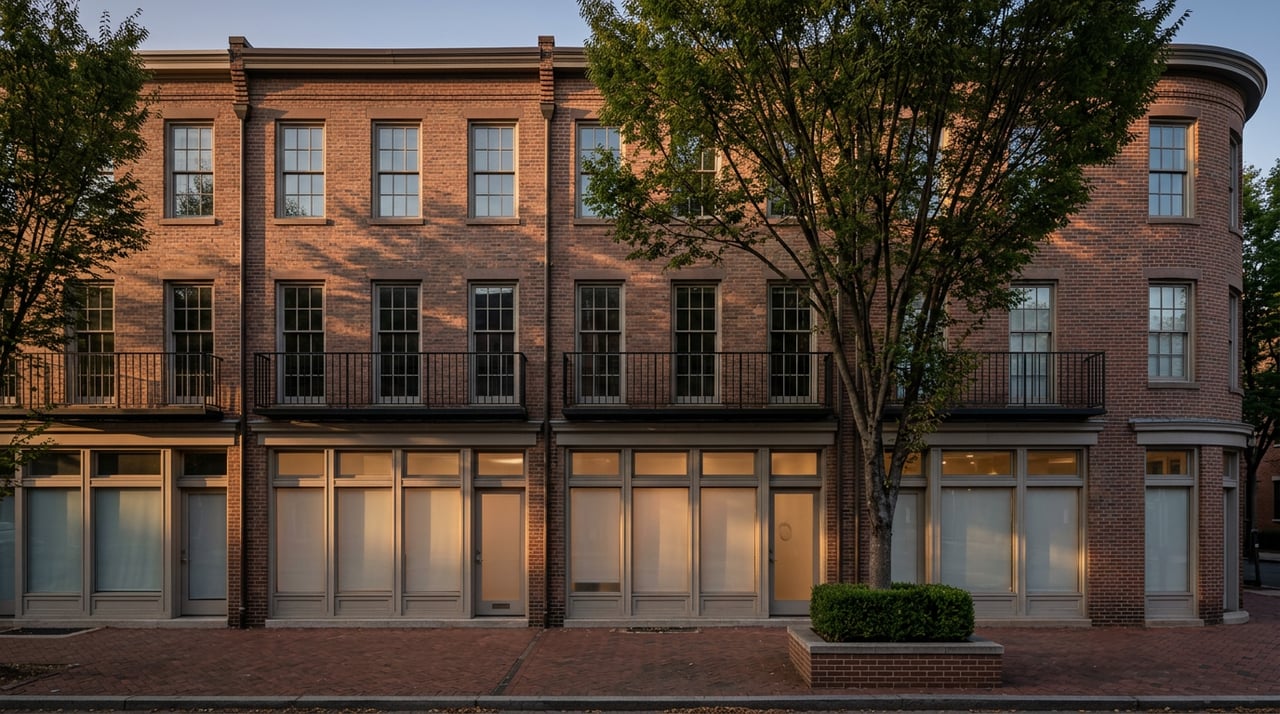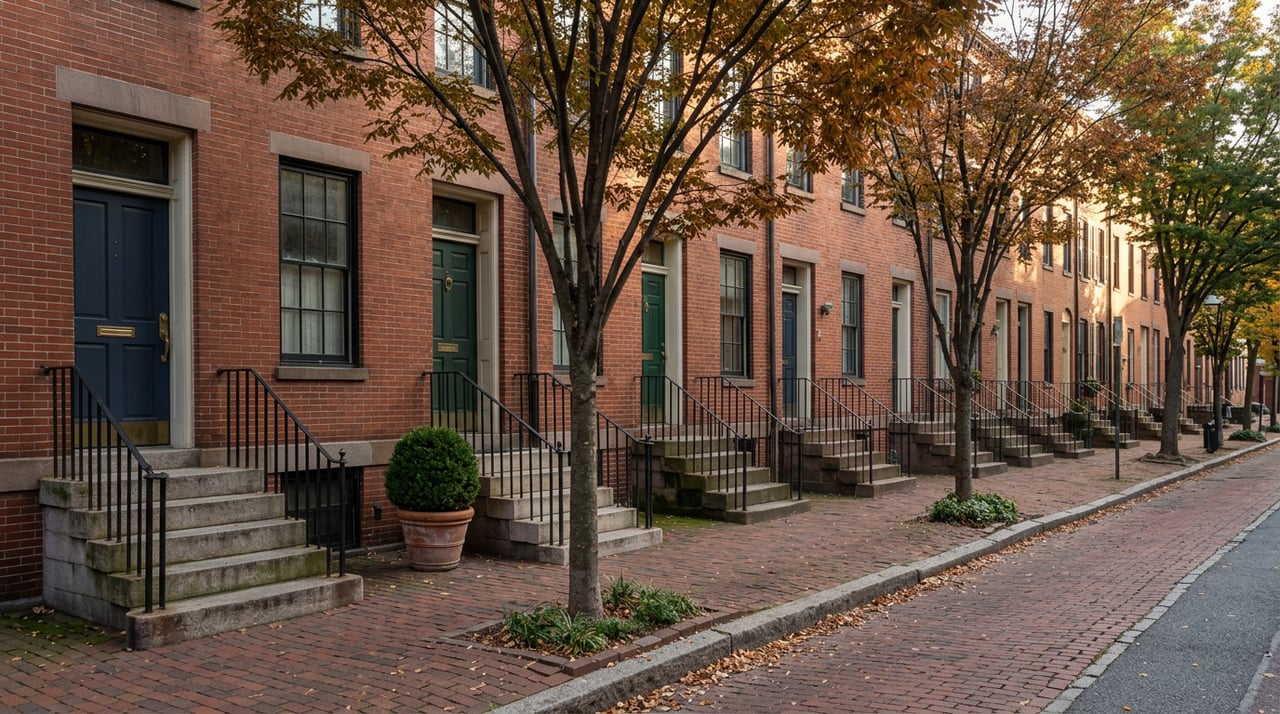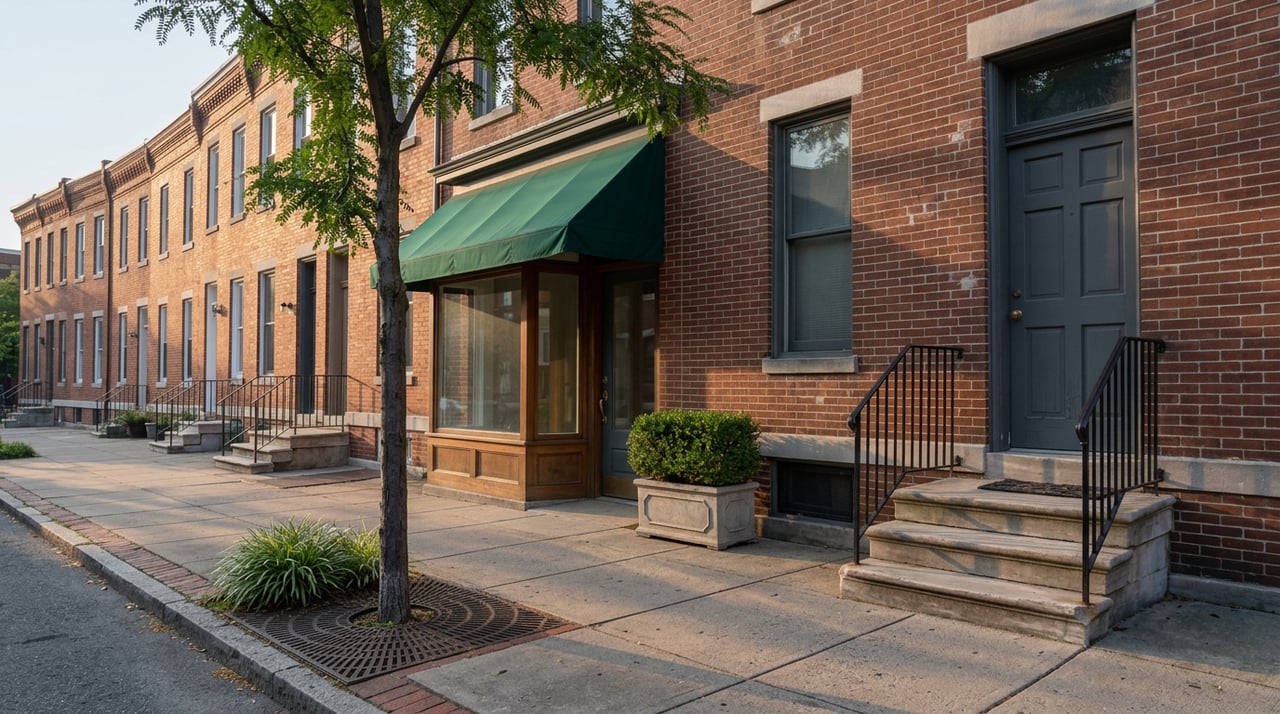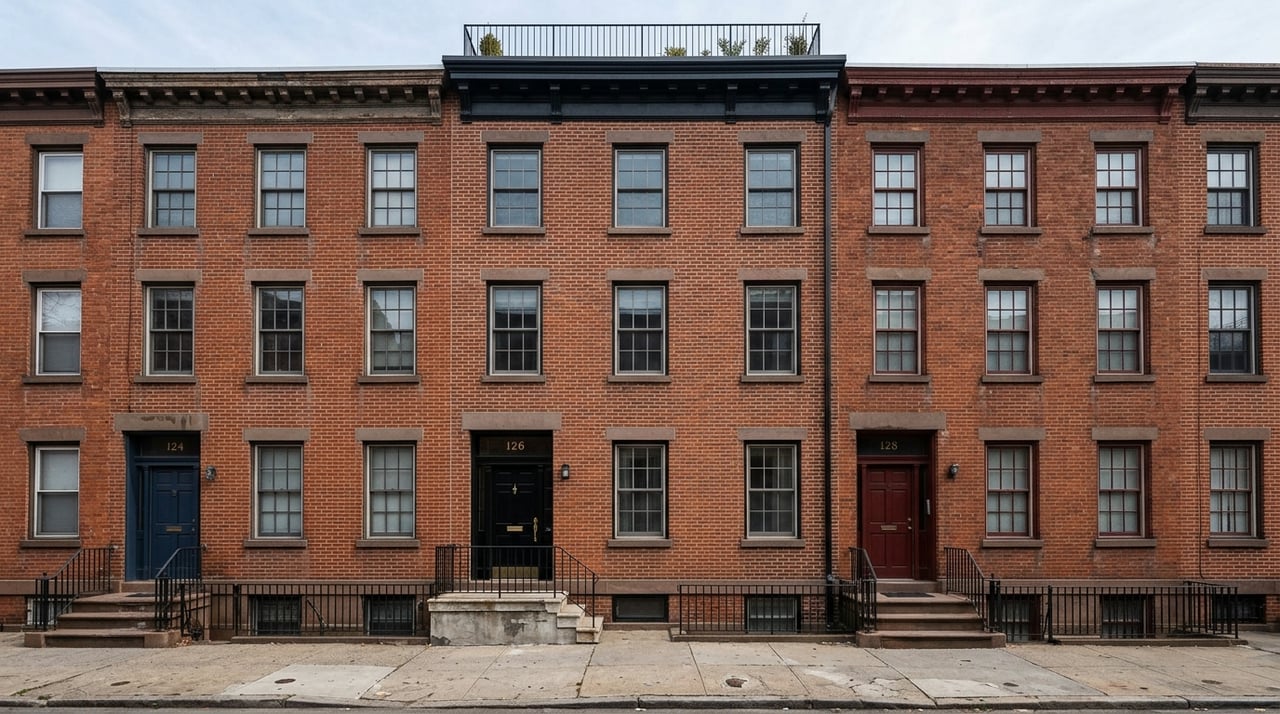
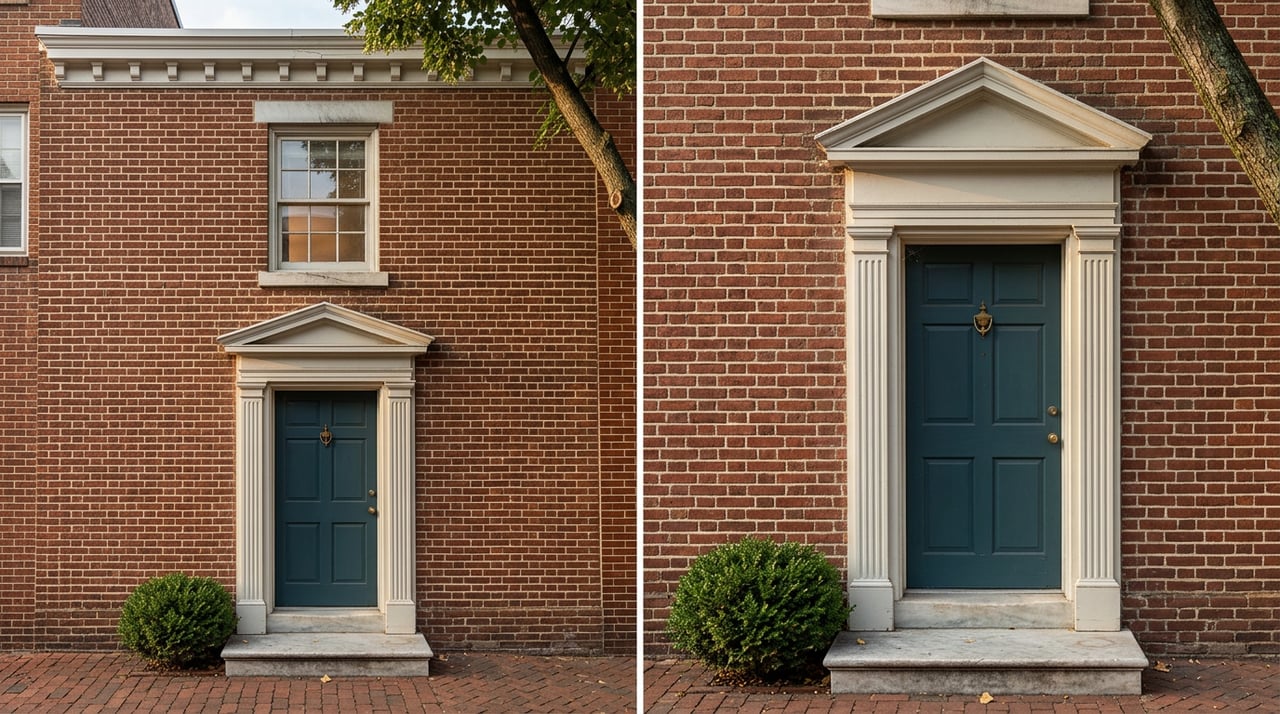
If you toured a rowhouse in Washington Square West this summer, your agent probably mentioned, almost in passing, that the block sits inside a historic district. It reads like a settled fact, the kind of line that shows up on a listing sheet next to square footage and property taxes. Right now, in Washington Square West, it isn't settled. Since February, a judge has voided the district's 2024 designation, the city has appealed and won a stay, the Court of Common Pleas has reopened the case entirely, and the litigation is still active with no hearing date set as of late July. For roughly 1,400 properties bounded by Walnut and Lombard Streets, 8th and Juniper, whether a home is actually protected currently depends on which month you ask.
That matters if you own a home there, if you're under contract on one, or if you're weighing whether a listing in this pocket of Center City is worth the historic-district tradeoffs everyone assumes come with it. The tradeoffs are real. What's unusual right now is that the rules generating those tradeoffs are themselves the thing being argued in court.
How we got here
The Philadelphia Historical Commission approved the Washington Square West Historic District in September 2024, a 9-0 vote with one abstention, covering roughly 26 blocks and more than 1,400 properties built between 1740 and 1985. It was, by several accounts, one of the largest local historic designations in decades.
| Date | What happened |
|---|---|
| Sept 2024 | Historical Commission designates the district, covering more than 1,400 properties |
| Feb 26, 2026 | Court of Common Pleas Judge Christopher Hall voids the designation, citing a commissioner's conflict of interest and a lack of "substantial evidence" |
| March 10, 2026 | City's Law Department appeals; the appeal stays the ruling, so protections remain enforceable |
| March 30, 2026 | Court vacates its own order after the Preservation Alliance intervenes, sends the case back for new briefing |
| May 2026 | Preservation Alliance files a brief defending the designation; opponents given 30 days to respond |
| Late July 2026 | Case remains unresolved, no hearing scheduled |
The February ruling turned on a narrow but serious problem. Attorney Dan Auerbach, representing property owners Jonathan Hessney, Colin Murphy, and Joshua Zugerman, argued that Historical Commission member Emily Cooperman had improperly helped draft the nomination's supporting materials before recusing herself from the vote, and that the roughly 1,500-page nomination document didn't actually demonstrate why hundreds of ordinary buildings inside the boundary deserved protection, as opposed to the handful of architecturally significant ones. Judge Hall agreed on both points.
The Preservation Alliance's Paul Steinke didn't see it coming. "We're baffled, confused, why this nomination, of all nominations, doesn't meet this judge's standard," he said after the ruling. The city's appeal restored the district's protections while the case is pending, and when the Court of Common Pleas granted the Preservation Alliance formal party status in March, it wiped its own earlier order and sent everyone back to square one on the paperwork. That's where things sit today.
Why this isn't a normal historic-district conversation
Buying in most historic districts is a known quantity. You accept that exterior changes need Commission sign-off, that window and roofing materials have to match approved standards, and that permits take longer. What's different in Washington Square West is that those rules are currently in force only because of a procedural stay, not because a court has affirmed that the district was properly created in the first place. That's a different category of risk than the usual "approval takes six extra weeks" tradeoff. It's closer to "will this designation still exist by the time my renovation or my closing happens."
It also matters unevenly across the boundary. According to WHYY's reporting on the original nomination, more than half of the properties inside the district were already individually listed on Philadelphia's local historic register before the district existed, meaning their protection doesn't depend on how this lawsuit ends. The properties actually at stake in the litigation are the several hundred that are protected only because they're inside the district boundary, the ones the plaintiffs' attorney described as lacking documented individual significance.
That distinction is the practical thing to know before you assume "historic district" means the same level of protection, or the same level of restriction, for every address inside it.
What's actually happening while the case sits open
This isn't theoretical. The building at 1315-1317 Spruce Street, a 1917 structure that once housed the Engineers Club and is now home to the William Way LGBT Community Center, sits inside the contested boundary and is currently classified as significant to the district. WWCC's leadership has proposed demolishing it entirely to build a six-story replacement that would include affordable senior housing on the upper floors. Because the district's protections remain active during the appeal, that plan currently has to go through Historical Commission review before any demolition permit can be sought. Steinke has said he's hoping WWCC preserves elements like the facade and the original staircases rather than a full teardown, though he admits he hasn't convinced the organization's leadership to change course.
If the district is eventually struck down for good, that Commission review requirement goes away for properties like this one that aren't individually listed. If it survives, it stays. Right now, for a project like this and for smaller ones, the requirement is real and enforceable, which is easy to miss if you're relying on secondhand information about a lawsuit rather than checking a specific address.
What to check before you buy, sell, or renovate here
A few concrete steps, none of which require a law degree, will tell you where a specific property actually stands:
- Search the address in the Philadelphia Historical Commission's records and cross-reference it against the city's Atlas mapping tool to see whether it carries an individual local designation separate from the district boundary.
- If a renovation plan includes exterior work, ask directly whether it needs Commission review right now, not whether it will need review once the lawsuit resolves. The stay means the answer today is yes for most contributing properties.
- Budget time if a project also needs a zoning variance on top of Commission approval. A recent Metro Philadelphia guide to navigating property changes in the city's historic districts notes that the Zoning Board of Adjustment approves roughly 90 percent of variance requests it hears, but the full process commonly runs six to nine months from application to decision, and land-use attorneys handling this kind of dual review typically charge $300 to $450 an hour.
- If you're selling, get ahead of the conversation. A buyer's attorney or title search will surface this litigation on its own. It's better coming from your agent, with context, than as a surprise during due diligence.
None of this is legal advice, and if a purchase or renovation plan genuinely hinges on how the case turns out, a Philadelphia land-use attorney is the only person who can tell you where your specific address stands and what your options are in the meantime.
A few questions that come up
Does the lawsuit mean I can skip Historical Commission approval for exterior work right now? No. The stay means the district's rules apply today. Commission review is still required for exterior alterations and demolition permits inside the boundary until a court says otherwise.
Is Washington Square West the same as Society Hill? No, though they border each other. Washington Square West runs roughly from Walnut Street to Lombard Street between 8th and Juniper, on the western edge of the Washington Square footprint, sandwiched between Society Hill and Rittenhouse Square. Society Hill's own historic district, established decades ago, isn't part of this litigation.
If the case is eventually decided, will that happen quickly? Based on the timeline so far, probably not. The case has already moved through a ruling, an appeal, a vacated order, and a new round of briefing over the course of about five months, with no hearing date set. A final resolution realistically sits months away at minimum.
If you're weighing a purchase inside this boundary, or wondering what any of this means for a home you already own, our guide to buying a historic rowhouse in Society Hill covers the parts of the process that don't depend on this lawsuit. For questions specific to an address in Washington Square West, or a straight read on how this affects a sale you're planning, reach out to The Eric Fox Team. If you're on the selling side and want to understand what your home is worth under the district's current status, request a free market valuation and a plan built around your specific address, not a generic read on the neighborhood.